
The Real Reason Play-Based Learning Beats Early Academic Drills is that young children lose real opportunities to learn self-control and problem-solving when free play time shrinks, with researchers reporting a 25% decline in free play time for children ages 6 to 8 between 1981 and 1997. At our preschool, we see it every day, when children learn best through hands-on exploration, calm routines, and faith-filled classroom community instead of worksheets and pressure.
| What families want to know | What play-based learning supports |
|---|---|
| Will play-based preschool prepare my child for kindergarten? | Yes. Play builds early literacy and math habits through meaningful, hands-on practice. |
| Why do early academic drills backfire? | They can reduce time for practicing self-regulation, listening, and rule-following in real moments. |
| What does “play based learning for preschoolers” really look like? | Learning centers where children choose activities, build fine motor skills, and learn through guided exploration. |
| Is this still “learning”? | Yes. Play supports thinking skills, language growth, and social-emotional development. |
| What about a play based preschool near me? | Look for classrooms that include child-centered centers, worship routines, and intentional kindergarten readiness. |
| Where can we see your approach? | Start with a campus visit through our preschool homepage. |
| What ages do you serve? | We support children ages 2.5–6 with a warm, Christian, whole-child approach. |
When families hear “early academic drills,” they usually picture practice that leads directly to worksheets and test-ready answers. But the real foundation for kindergarten success is not just knowing facts, it is being able to focus, follow directions, take turns, communicate needs, and bounce back when something is hard.
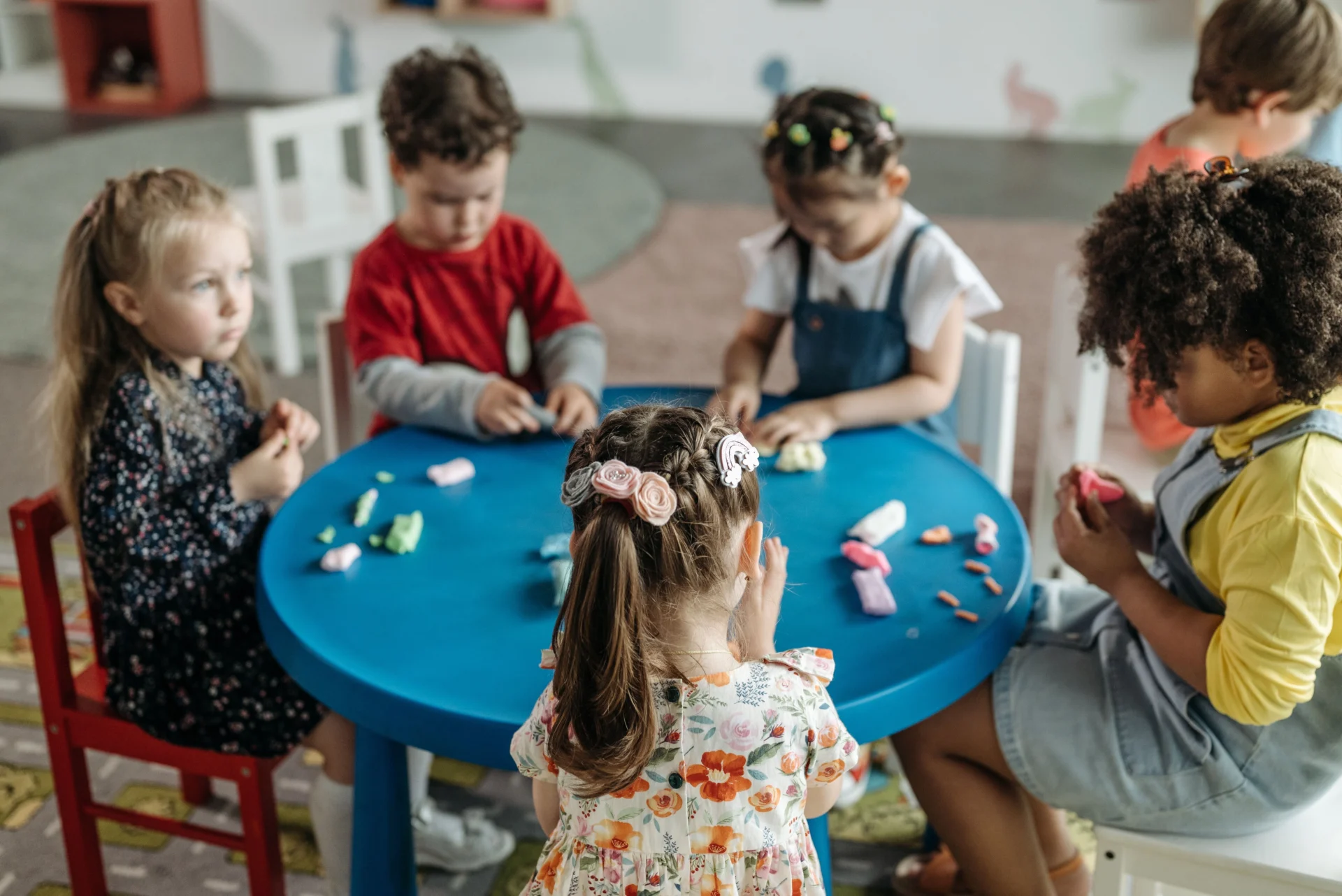
In a play based learning preschool classroom, those skills get practiced naturally. A child builds with blocks, then waits for a turn, then problem-solves when a tower falls. A child paints, then cleans up, then talks about what they made. Those moments might not look like “drill practice,” but they train the brain to work with others, manage frustration, and keep trying.
We also see how play supports language development. Children describe their choices, negotiate roles, and expand vocabulary in the moment. That is exactly how “learning through play kindergarten” becomes real, because children are using language to think, not just repeating it after an adult.
And because we are Christian, we weave values into daily learning. Children practice love and respect for self and others, they learn to respond with kindness, and they build habits that match our community standards, not just behavior rules on paper.
Modern research keeps reinforcing what experienced preschool teachers already notice. Play is not empty time. It is structured in a way that strengthens cognition and self-regulation, while giving children repeated practice with social skills and emotional control.
One reason the conversation matters in 2026 is that families are trying to make smart decisions with limited time, and many programs still market “academics first.” But the evidence suggests play-based models improve outcomes by making learning active, not passive.
That is a big deal, because teachers are the ones who see children up close during real routines. They watch which classrooms help kids stay engaged, which environments reduce meltdowns, and which approaches help children carry skills from one activity to the next.
And in our preschool, we design the day to match what children need. We build in play and movement, we keep transitions gentle, and we use classroom centers that support exploration across skill areas.
We want to say this clearly, play-based learning is not the same as “anything goes.” A play based preschool still uses structure, it just uses structure that matches how young children learn.
Our daily rhythm includes dependable routines and intentional learning blocks. For example, children start with morning activities and centers, then gather for welcome circle and worship, then head outdoors for outside play. Later, we return to classroom centers, enjoy lunch, and provide rest time and quiet experiences so children can regulate and recharge.
Here is what a typical schedule looks like for our students:
Notice what is built in, worship time, quiet time, outdoor play, and centers. Those are not distractions from learning. They are part of it, because children learn self-management, language, and problem-solving through these consistent cycles.
Families often ask us if play based learning for preschoolers can still prepare children for early school expectations. The answer is yes, because we connect learning to what children are already doing.
Our kindergarten readiness approach focuses on the whole child. Children work on early literacy and math, but they do it through hands-on activities, routines, and meaningful practice that feels like learning because children are active participants.
In our classrooms, children build early skills through:
This is exactly what we mean when we say our Pre-K program prepares children for a confident transition into kindergarten. It is not about forcing output. It is about building the internal readiness that makes academics stick.
That is also why parents who look for a play based learning preschool near me should ask what the classroom day actually includes. If the day is all teacher-led instruction and worksheets, children might finish activities faster, but they may not practice the habits that make learning last.

Our preschool follows a child-centered, hands-on approach to learning, inspired by Montessori principles. That means children are given choices from developmentally appropriate activities, encouraging independence, decision-making, and a love for learning.
Teachers act as gentle guides. That matters. When guidance is thoughtful, play becomes purposeful. Children can explore materials freely, then teachers step in with prompts that deepen thinking, expand language, or reinforce respectful classroom behavior.
In our classrooms, hands-on centers support development across the day, including:
We also make room for calm and cozy corners. Quiet areas are available for reading, reflection, or taking a break. That helps children regulate their emotions, and it keeps the classroom supportive for every personality type, even the child who struggles with big group moments.
And because we serve ages 2.5–6, we support learning levels that vary widely. A play based learning preschool must handle differences in pace and confidence, and centers do that naturally.
If you want to see the approach in person, our best next step is scheduling a tour. You can start from our preschool homepage.
One reason play based learning in kindergarten matters is that play gives more children access to learning through multiple pathways. Some kids show strength in verbal communication, others in building, others in movement or art. Play lets each child learn in the way that fits them best, then brings them along step by step.
That is also why play can reduce gaps that show up when early demands arrive too quickly. When children have to sit still, fill in answers, and move on before they are ready, the classroom can unintentionally reward only one type of readiness.
In our setting, we pair play with faith and consistent expectations. We create an environment where children feel secure and valued. When children feel safe, they take learning risks, they try again, and they build confidence that carries into kindergarten.
And because we are a close-knit community, families are part of the story too. Parents can join on a volunteer basis for celebrations and events like Thanksgiving, Christmas, Easter activities, and end-of-year graduation. That shared involvement reinforces learning, relationships, and trust.
Yes. In 2026, the evidence continues to support play based learning for preschoolers as a way to build the academic habits that matter, like focus, language use, and self-regulation, rather than rushing worksheets. The Real Reason Play-Based Learning Beats Early Academic Drills is that children learn more deeply when they practice skills through meaningful play.
It does, especially when a program blends play with clear kindergarten readiness goals. We prepare children with early literacy, math, fine motor skills, social skills, and self-help routines, all through hands-on centers and consistent daily structure.
In a true play based preschool near me, you should expect centers and child choice, regular outdoor play, story time, and structured routines like worship or circle time. The Real Reason Play-Based Learning Beats Early Academic Drills is that children stay engaged while practicing real skills every day.
Yes. Learning targets are met through play-based learning in kindergarten when teachers guide activities and observe skill growth. Kids can work on literacy, math, and problem-solving while still moving, collaborating, and exploring.
Often, yes. Early academic drills can increase stress for children who need more movement and hands-on experiences to think clearly. With play based learning preschool approaches, children practice self-control and attention through engaging activities rather than prolonged seatwork.
Look for a program that clearly describes its daily schedule, its child-centered centers, and how it supports kindergarten readiness without relying only on drill-based tasks. If a program balances play, routines, and faith-based values like ours, that is usually a strong sign it will support children well.
The Real Reason Play-Based Learning Beats Early Academic Drills is that play supports the whole foundation kindergarten requires: self-regulation, language, social skills, confidence, and hands-on problem-solving. In 2026, more families are looking for play based learning preschool options that prepare children through meaningful practice, not pressure.
If you want to experience what play-based learning looks like with structure, faith integration, and kindergarten readiness built in, we would love to meet you. The best way to start is to schedule a tour of our preschool and see the classroom rhythm firsthand.